
A Retired Pilot Exposes What Airlines Deliberately Did to Economy Seats 15 Years Ago
What changed in economy seating over fifteen years, and why your tailbone pays for it
"I flew for 25 years in total comfort while passengers behind me suffered on seats the airlines deliberately made worse. Here's what they don't want you to know." - Capt. Mark Denholm
I Flew for 25 Years in Comfort While the Seats Behind Me Got Worse
If you've noticed yourself constantly shifting in your seat on every flight, searching for relief that never comes...
If you've blamed "just getting older" when you hobble off long-haul flights in agony...
If you've caught yourself researching business class prices just to make the suffering stop...
Then you need to read every word of this report.
Because what I'm about to share will explain why everything you've tried has failed. And how thousands of travelers are now reversing a problem the airlines engineered into every economy seat.
My name is Captain Mark Denholm. I flew commercial aircraft for 25 years, 747s and 777s, mostly international routes. I retired two years ago after logging over 18,000 flight hours.
But after what I discovered, the deliberate engineering, the billions made from passengers' suffering, I can't stay silent anymore.
There's a hidden truth about economy seats that airlines buried 15 years ago. It's affecting most travelers over 50 right now. And here's the part that made me absolutely furious...
They engineered this problem on purpose. Then they built an $8,000 escape hatch to profit from your pain.
The Call From Valencia That Made Me Buy an Economy Ticket
This story isn't about my career. It's about my mother, Barbara. She worked as a postal carrier for 30 years, on her feet, walking routes, in all weather.
She's as tough as they come. She doesn't complain. Last month, she flew to Valencia to visit my sister Sarah.
They hadn't seen each other in three years. The call came on her second day there. "Mark, I don't know what's wrong with me."
Her voice was trembling. "The flight... by hour six, I couldn't sit still. My tailbone, my lower back... I've never felt anything like it."
She paused. "I spent yesterday in bed. Sarah took time off work to see me, and I can barely walk. What's happening to me?"
I tried to reassure her it was just a long flight, that she'd feel better soon. But two days later, my sister called. "Mark, Mom's not getting better. She can barely move. Can you fly out and bring her home?"
Seat 32B: The First Time I Sat Where I'd Flown for 25 Years
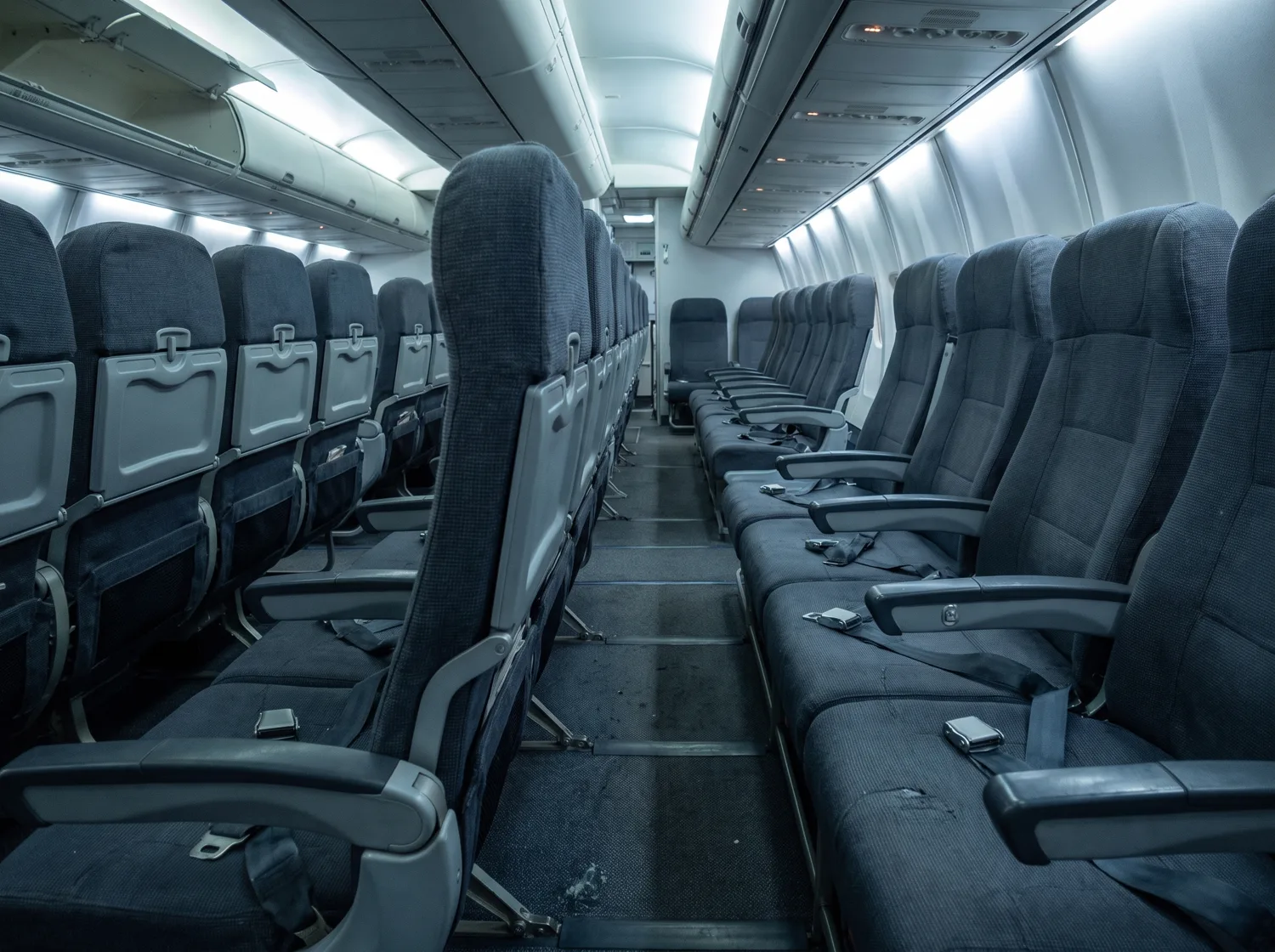
I booked a ticket to Valencia the next day. Same route I'd flown dozens of times as captain. I settled into seat 32B, a standard economy seat in a 777.
The same aircraft type I'd commanded for 12 years. Within two hours, I understood exactly what Mom had experienced. The seat felt nothing like the pilot seats I'd known.
It was flat. Hard. By hour three, I was shifting constantly.
By hour five, I was in genuine pain. That's when it hit me: this wasn't the same plane I remembered. Something had changed.
An Engineer I Trusted Told Me What Happened to the Padding
When I landed, I went straight to a colleague who still flies, a senior operations engineer I'd known for 15 years.
"Dave, what happened to the seats? I just flew economy for the first time. Those aren't the same specs."
He looked uncomfortable. "When did you retire? 2023?" "Yeah."
"Then you missed the final round. Mark, they've been doing this since 2008. Every few years, another quarter-inch of padding. Lighter seats, better fuel efficiency."
He pulled up a specification document. "2005 seat cushions: 3.2 inches of padding. Current spec: 1.7 inches."
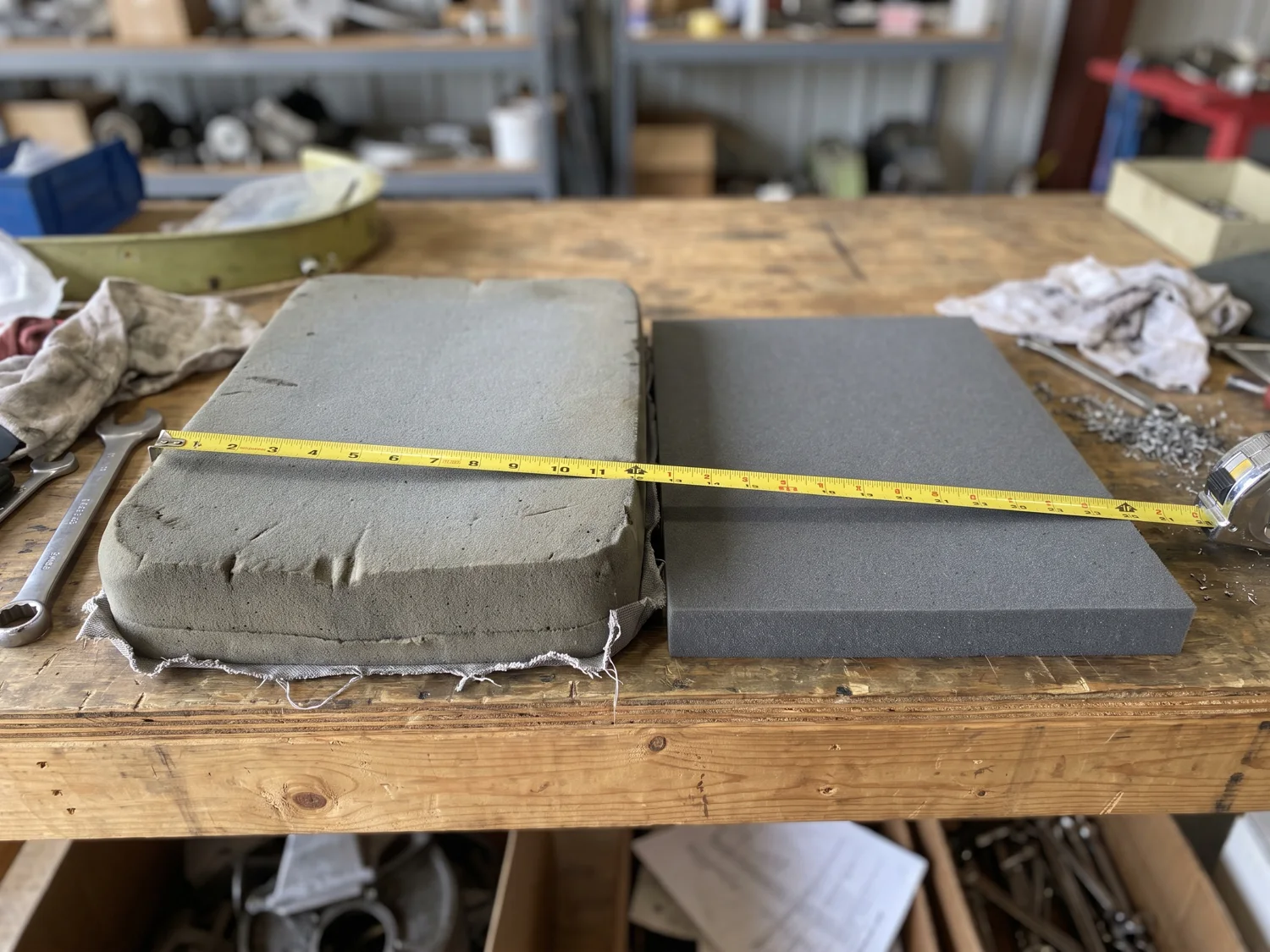
"They cut the padding in half?"
"Not all at once. Gradually. Started after the fuel crisis in '08. One long-haul carrier worked out that removing just one pound per seat saved 53,000 liters of fuel per year."
"Seat padding? That's millions per year across a fleet." I felt sick.
"But passengers must be complaining." He shook his head. "That's the genius of it. They blame themselves. Their age. Their weight. Their backs. They never think to blame the seat."
Then he said something I'll never forget: "The ones who do figure it out? They upgrade to business class. We engineered the discomfort, Mark. Then we sold them the escape."
The Trap Has a Name: Pressure Concentration
I spent the next two days helping Mom prepare for our flight home. During that time, I couldn't stop researching what Dave had told me.
Here's what I discovered: the pain you feel isn't from "cheap seats" or "getting older."
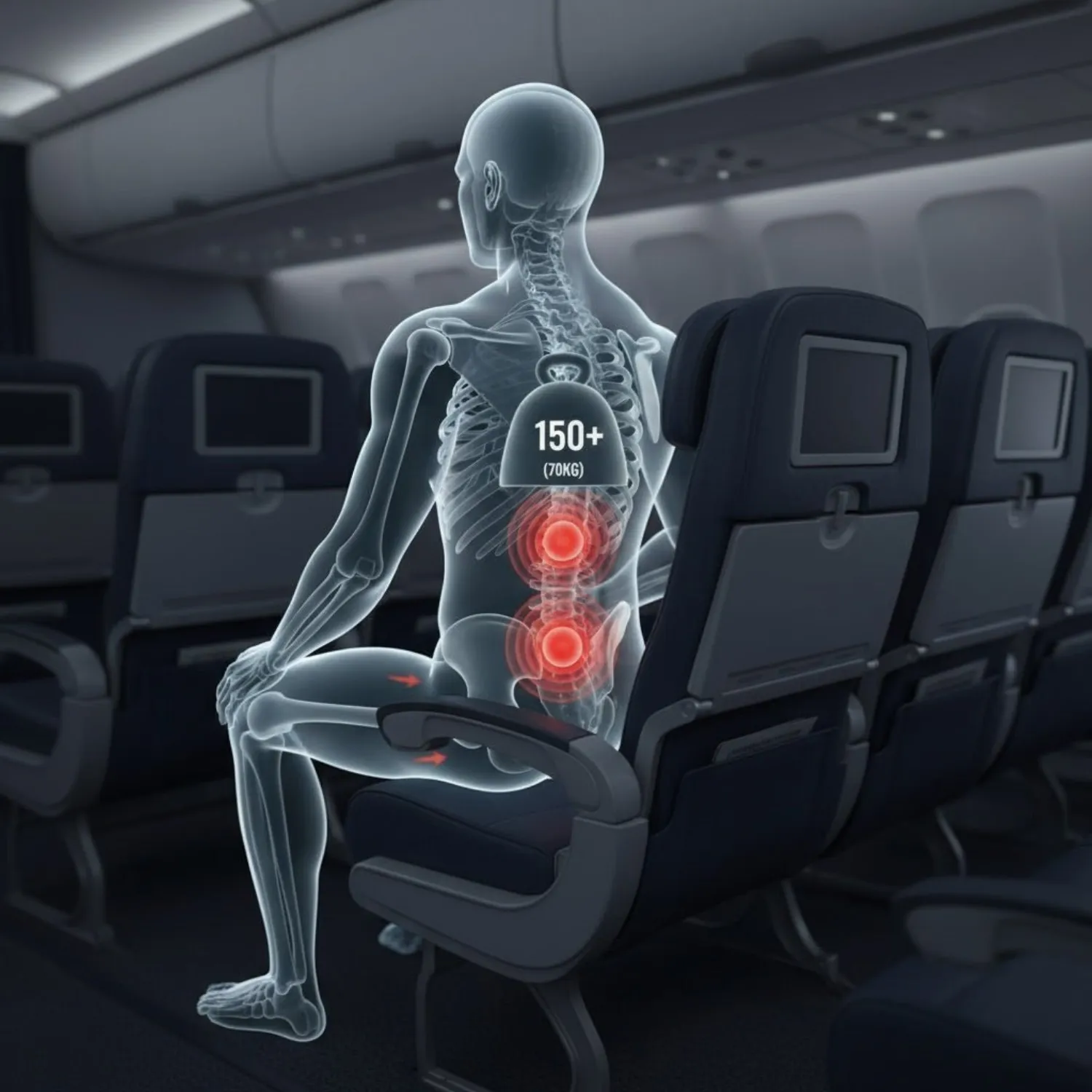
It's from pressure concentration. When airlines removed that padding, they didn't just make seats less comfortable. They removed the contour that distributes pressure evenly across your body.
A properly designed seat has a subtle shape that:
- Supports your thighs at the correct angle
- Keeps your pelvis tilted slightly forward
- Distributes weight across your sit bones AND thighs
- Prevents your tailbone from bearing concentrated load
When they removed the padding, they removed that contour. Now you're sitting on what's essentially a flat, hard surface. What happens biomechanically?
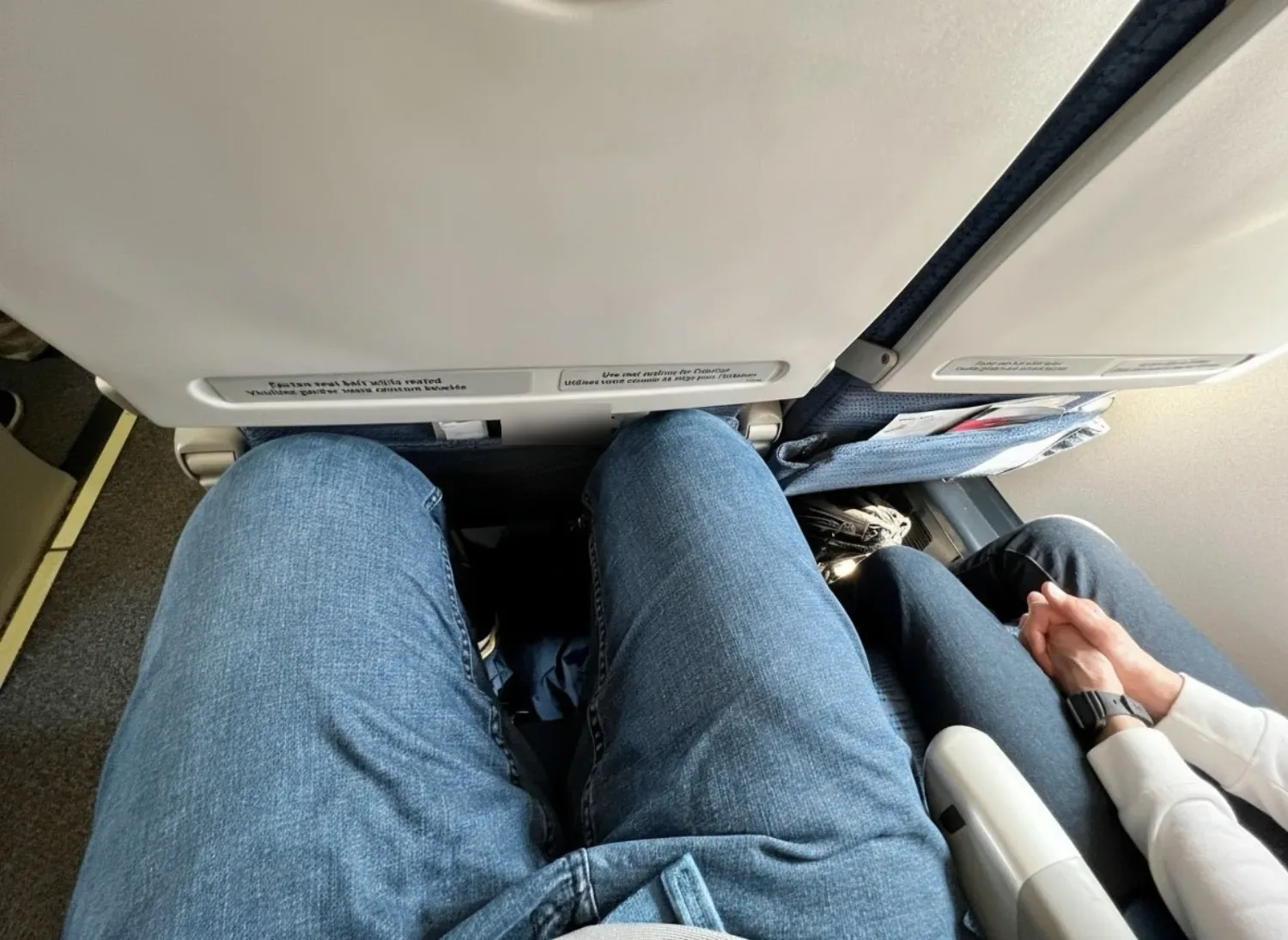
Your pelvis tilts backward. All your upper body weight, 60-70% of your total mass, concentrates onto your tailbone and sit bones. An area roughly the size of your palm now bears over 150 pounds of pressure.
After 90 minutes, this sustained pressure begins causing tissue stress. One traveler on an aviation forum described it perfectly:
"Every airplane has THE most flat seat bottoms, no incline to support your thighs. I have to wear my seatbelt tight so I don't slide off little by little."
That's not age. That's not being out of shape. That's pressure concentration.
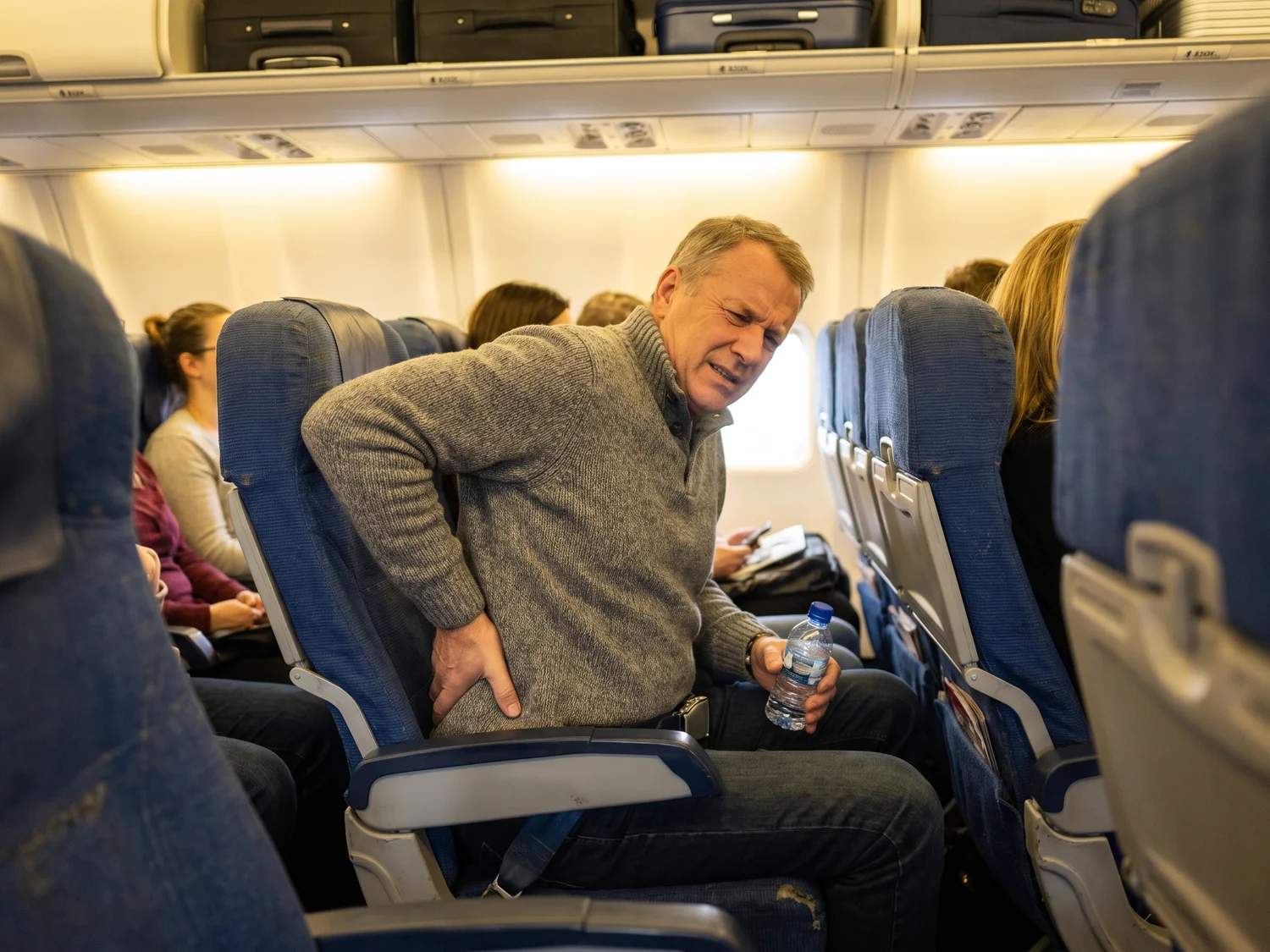
And it gets worse after 50. When you're younger, you have more muscle mass and natural padding. Your body absorbs poorly distributed pressure longer.
But after 50? You lose muscle density. You have less natural cushioning. Your bones are closer to the surface.
The same seat that was uncomfortable at 35 becomes excruciating at 60. The airlines didn't account for aging bodies, they counted on them.
Every Cushion I Looked At Solved the Wrong Problem
That evening, I went through what Mom had already bought over the years, receipts and all.
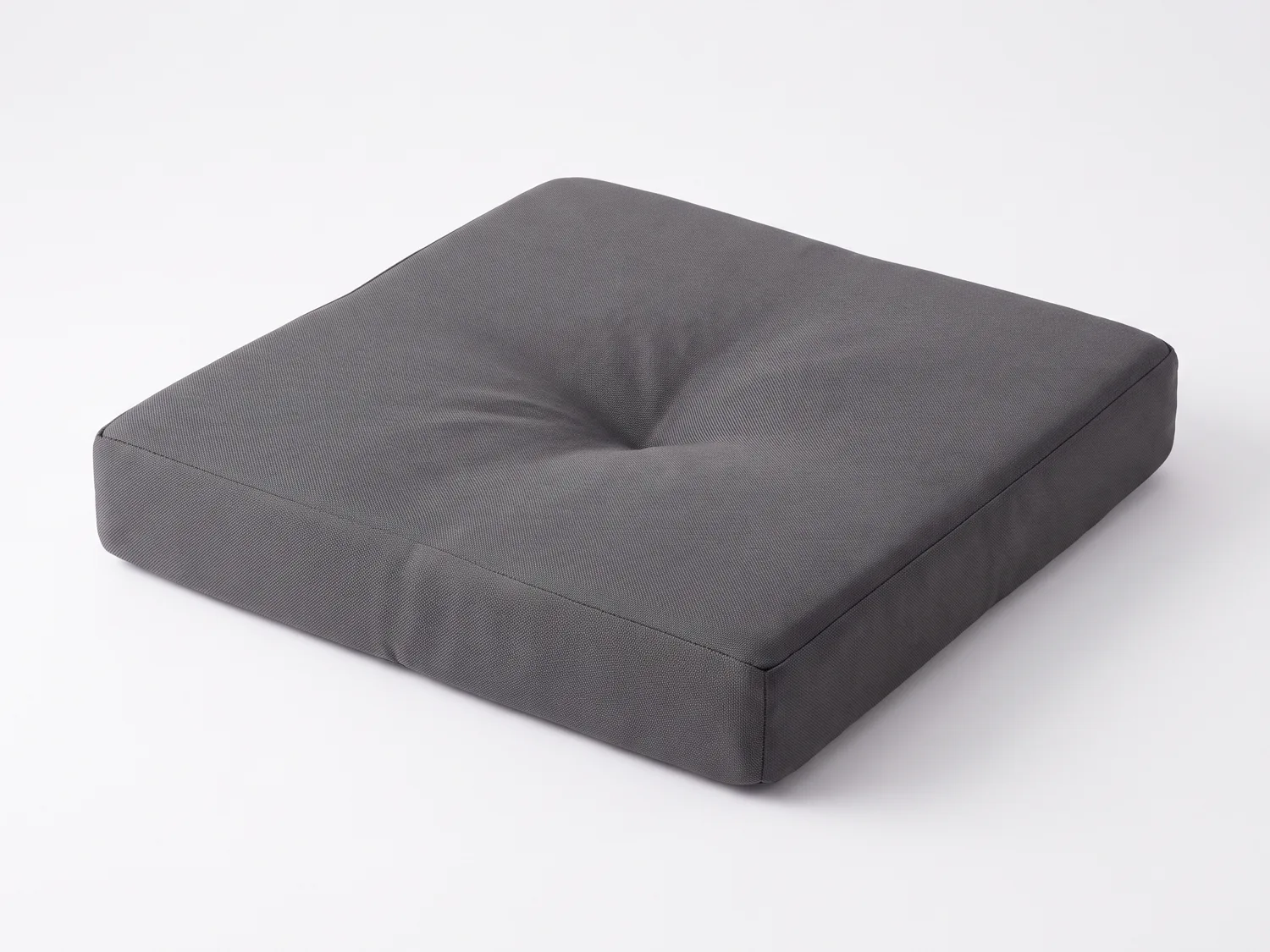
A $34 memory-foam wedge. It compressed under her by hour two and stayed that way. Bulky too, a quarter of her carry-on.
A $22 gel pad. Cold and pleasant in the shop, and within 30 minutes the gel had pushed away from the exact spot that hurt.
A $19 inflatable ring. A single balloon that created new pressure points wherever it pushed back. It leaked somewhere over the Atlantic.
Seventy-five dollars, spent in pieces, none of it touching the problem.
Memory foam's failure: it adds flat padding on top of a flat surface. Your tailbone still takes the concentrated load.
Gel's failure: it feels good at first, then you're back to sitting on thin plastic. Weight still concentrated.
Inflatables' failure: an unstable surface that creates unpredictable pressure and doesn't redistribute anything.
Here's the pattern: every product tries to add cushioning. None of them address pressure distribution.
And that's exactly what airlines want. When memory foam fails you on hour five of a flight to London, you don't blame the cushion. You blame your body.
Next time? You spend $4,200 on business class. The airline just made $4,170 in profit from your failed $30 cushion.
My Wife the Nurse Said We Solved This Twenty Years Ago
During my time in Valencia, I called my wife Carol. Carol is a registered nurse who works in our hospital's rehabilitation unit. She specializes in wheelchair patient care and pressure injury prevention.
She's spent 15 years working with patients who sit in wheelchairs 8-12 hours daily.
"Mark, we solved this problem 20 years ago," she said. "What do you mean?"
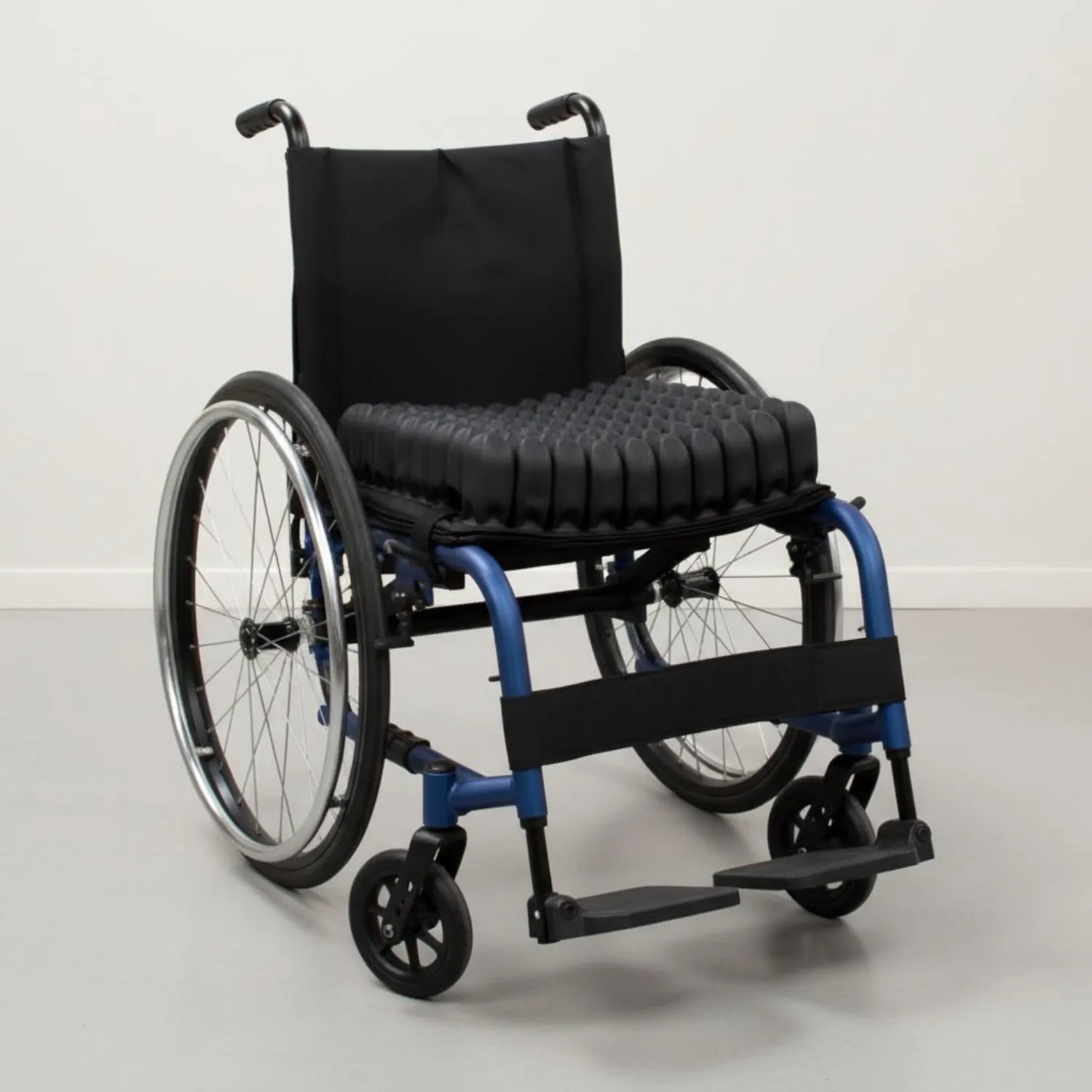
"Wheelchair users who sit all day don't get pressure injuries. Not because wheelchair seats are more comfortable. They use interconnected air cell technology." She explained the principle.
"Instead of one big air chamber, you have dozens of small cells connected to each other. When the patient shifts weight, air automatically moves between cells."
"Your tailbone doesn't take concentrated pressure, it's spread evenly across the whole seat. It is the same principle used in seating designed for long periods of sitting."
"Why don't travelers use this?"
"Because medical-grade wheelchair cushions weigh five pounds and are built permanently into chairs. Nobody's ever made them light enough to travel with."
That's when I knew what I had to find.
The Cushion That Finally Did What the Seat Used To
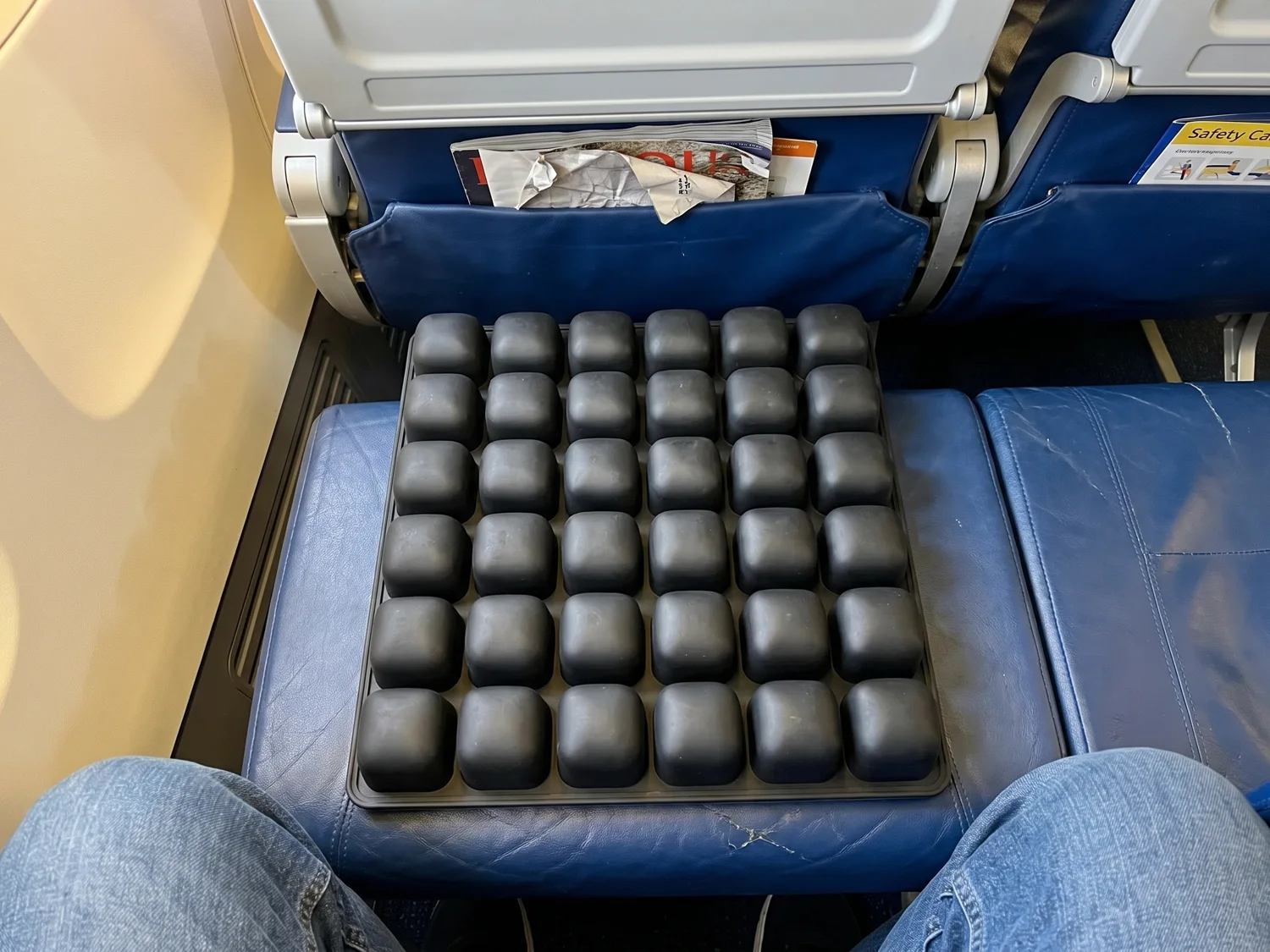
I spent every spare hour researching. I found a small company called Ralmutino that had done what Carol said was impossible.
They had re-engineered medical-grade air cell technology into something that works for travel.
It is called the Ralmutino Air-Cell Travel Cushion, and it costs $79.99. Mom thought that was a lot for a cushion. We will come back to it.
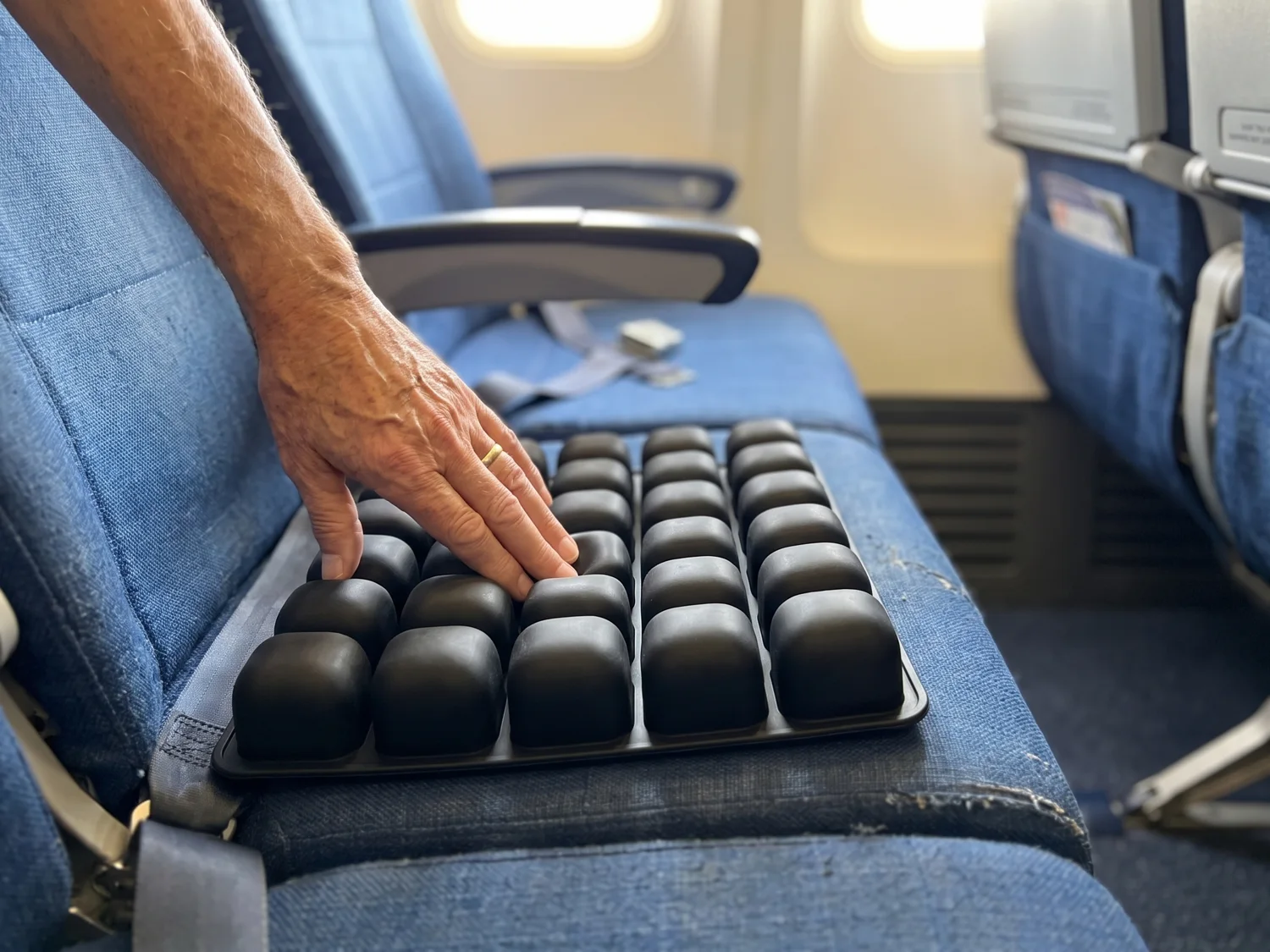
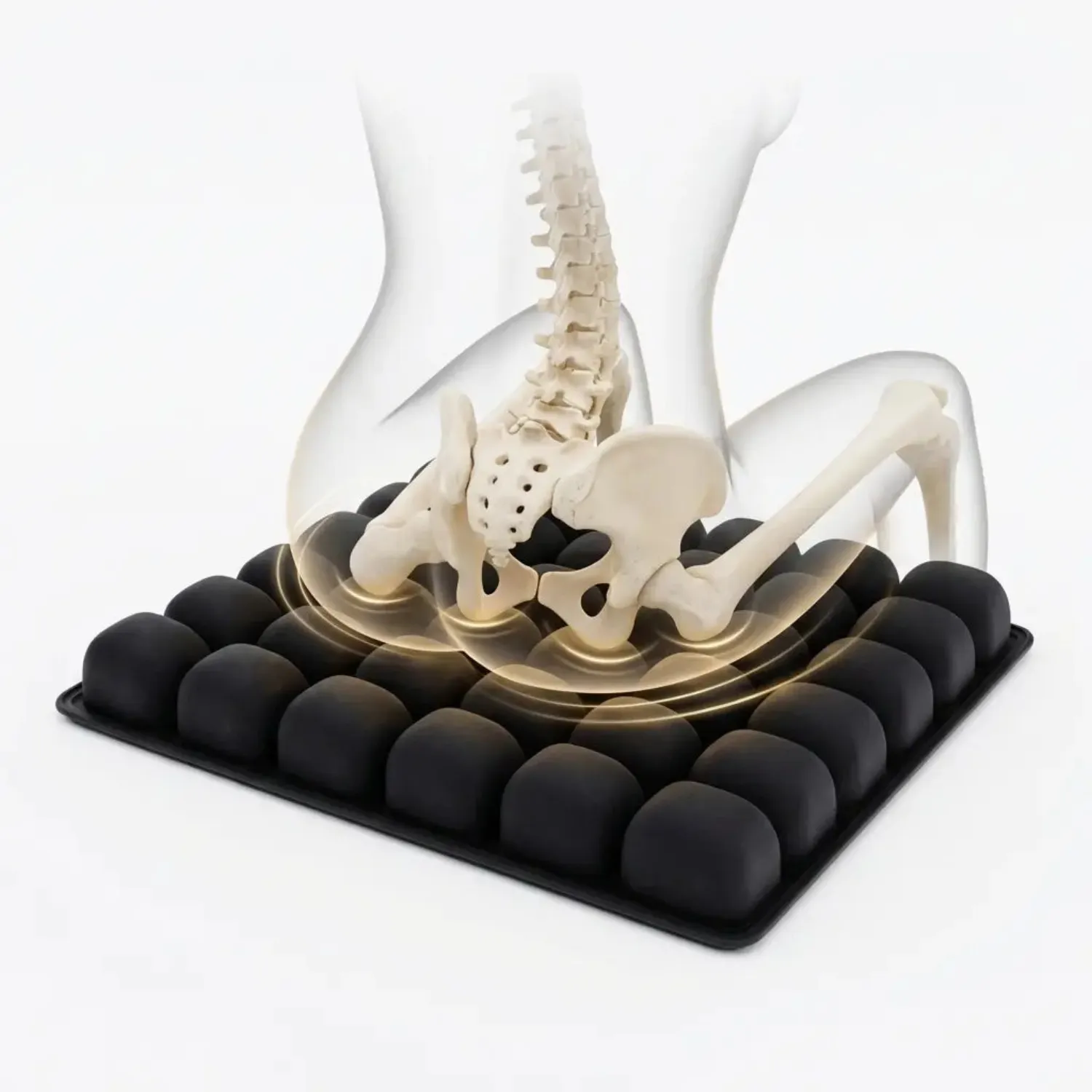
The principle is brilliant: instead of your tailbone holding most of your weight on one small spot, the air cells spread it out across the whole seat.
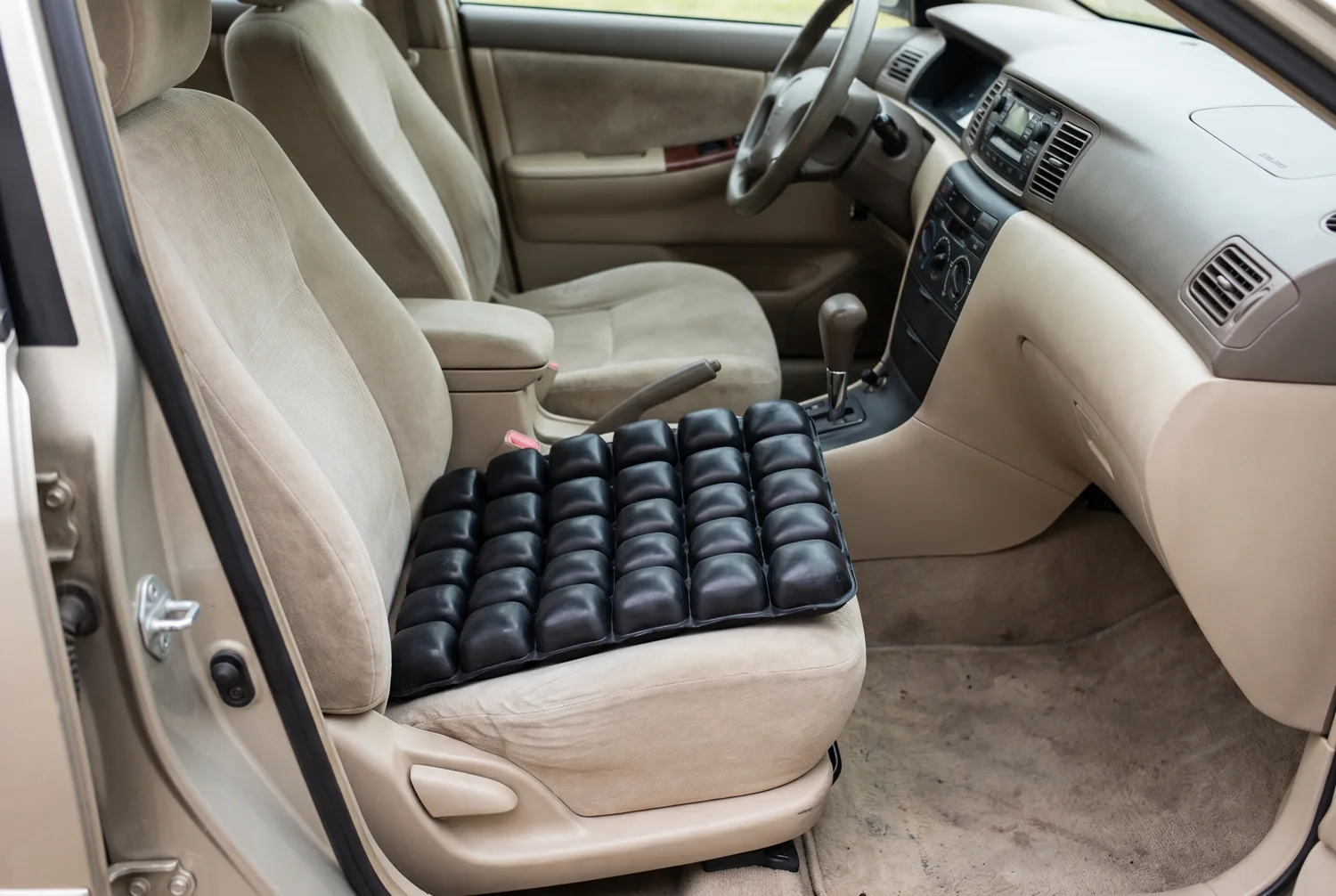
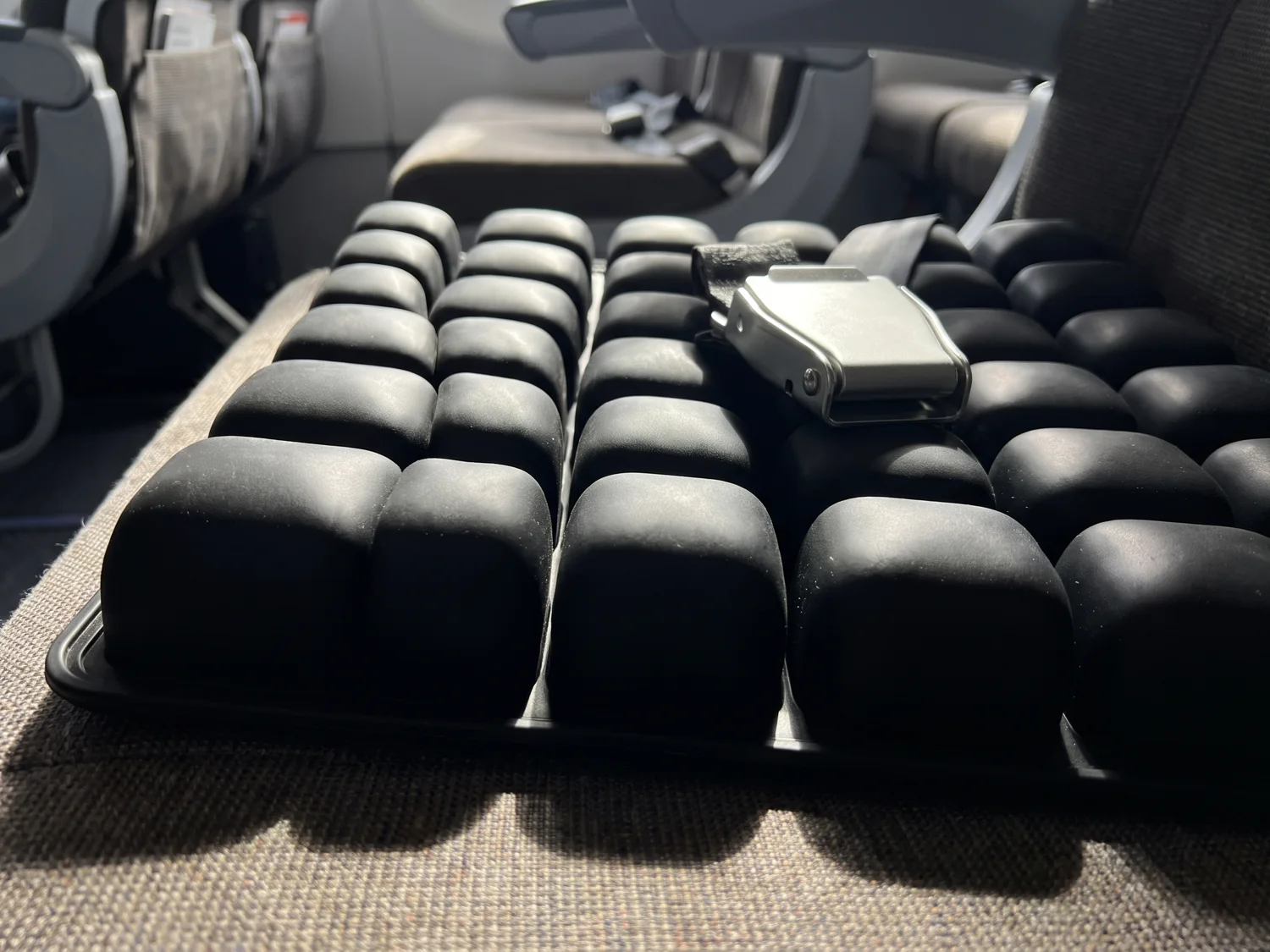
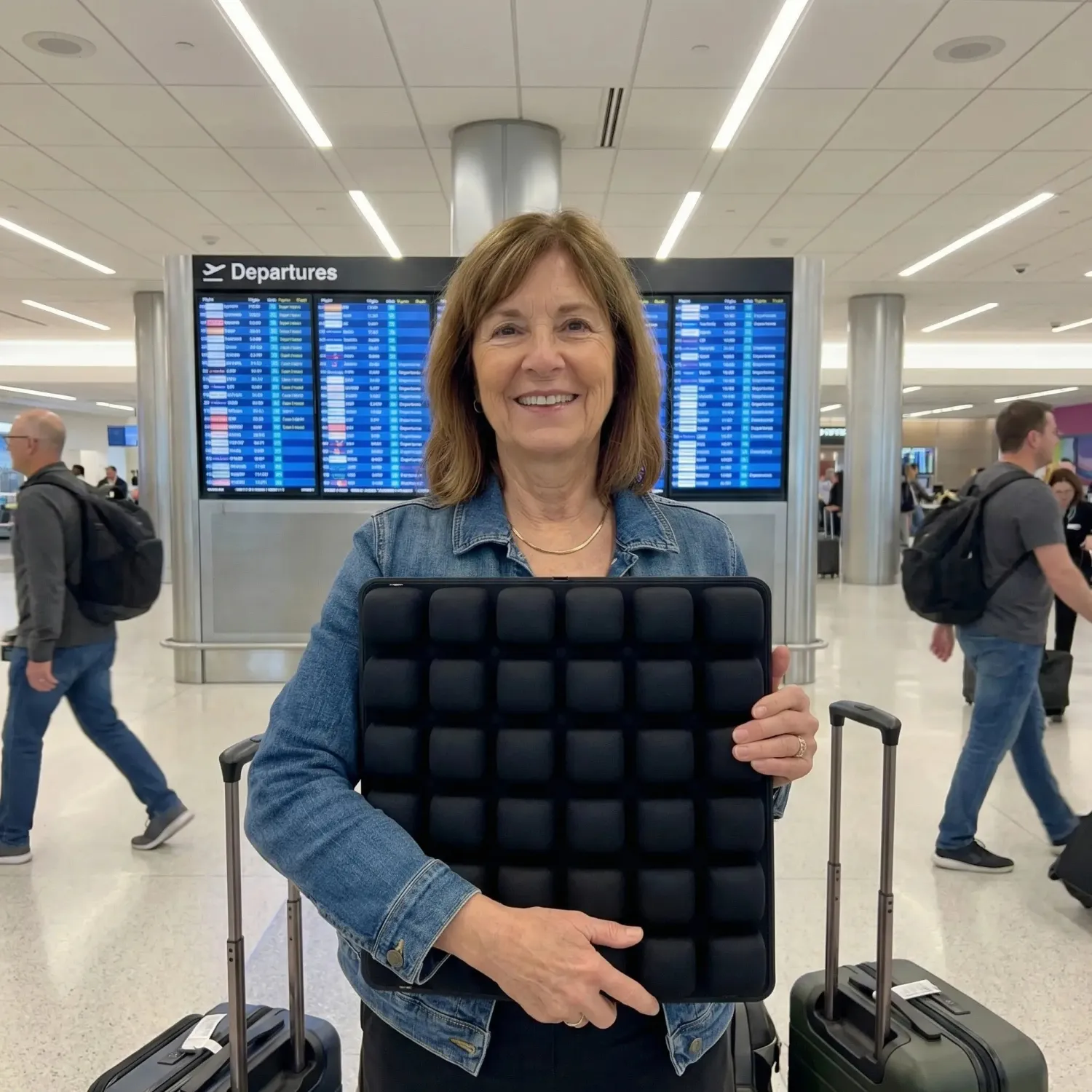
Here's how it works: there are 36 small air pockets that are all connected.
When you sit down, the ones under your tailbone feel the most pressure. But because they're connected, the air moves to the other pockets, spreading the pressure out.
The concentrated pressure drops from painful levels to comfortable, sustainable levels.
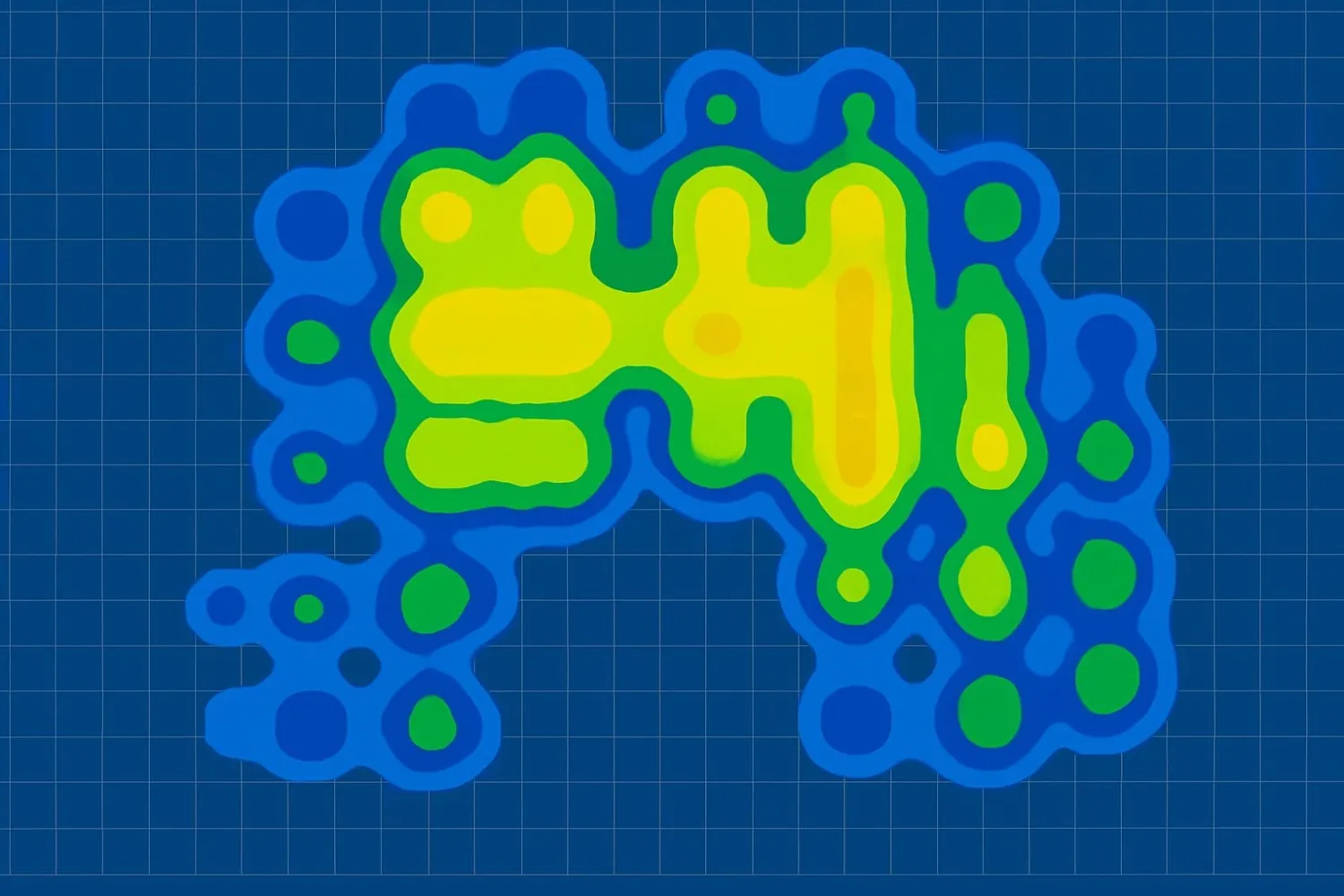
Your pelvis naturally tilts forward again. The cells recreate the contour airlines removed.
This isn't adding cushioning on top of a pressure point. This is eliminating the pressure point entirely.
Carol explained why this is the standard in hospitals: "Patients on interconnected air cells get far fewer pressure injuries than patients on foam. The air redistributes faster than tissue can be stressed. It's the technology we trust for 8-hour-plus sitting."
Here's what makes Ralmutino work for travel:
- 36 interconnected air cells using the same principle that protects wheelchair users hours daily
- Less than a pound, lighter than a water bottle, and cut to a modern economy seat
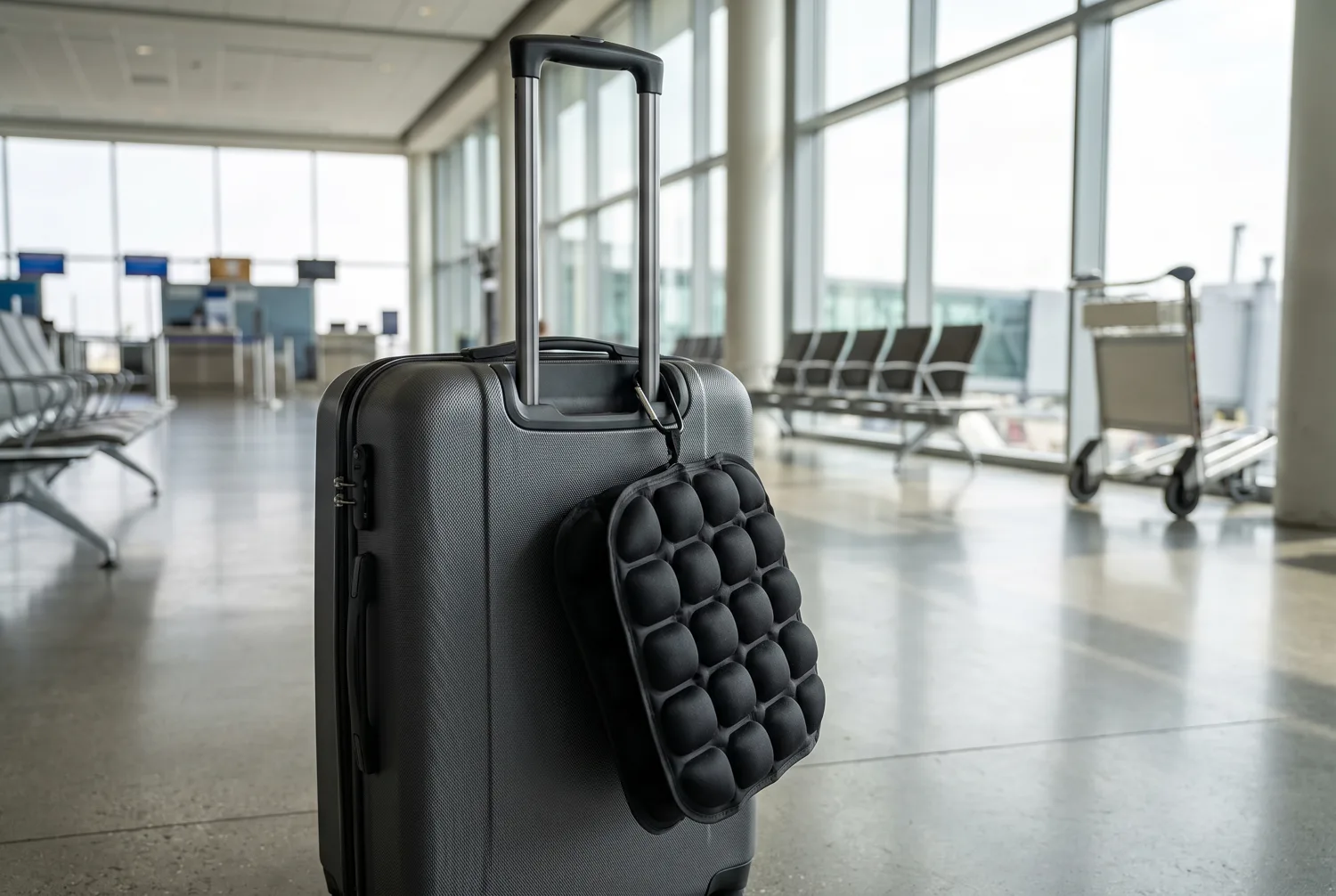
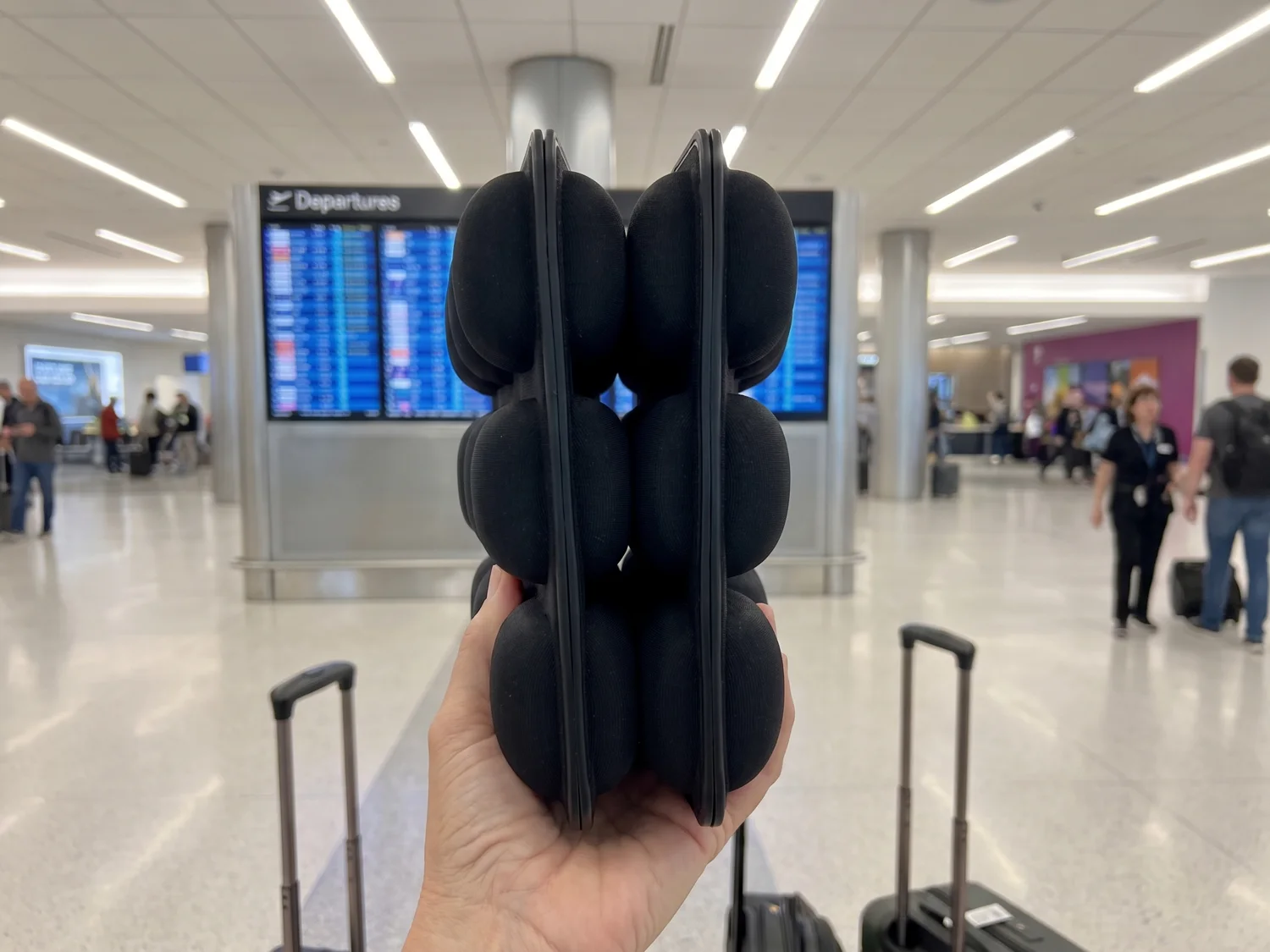
- Folds flat and clips to a carry-on handle
- Unfolds onto the seat in seconds, nothing to inflate
- Medical-grade materials, same specs Carol requires for hospital equipment
I ordered one for Mom's return flight.
Check AvailabilityNine Hours to New York, and Mom Stood Up Like Nothing Happened
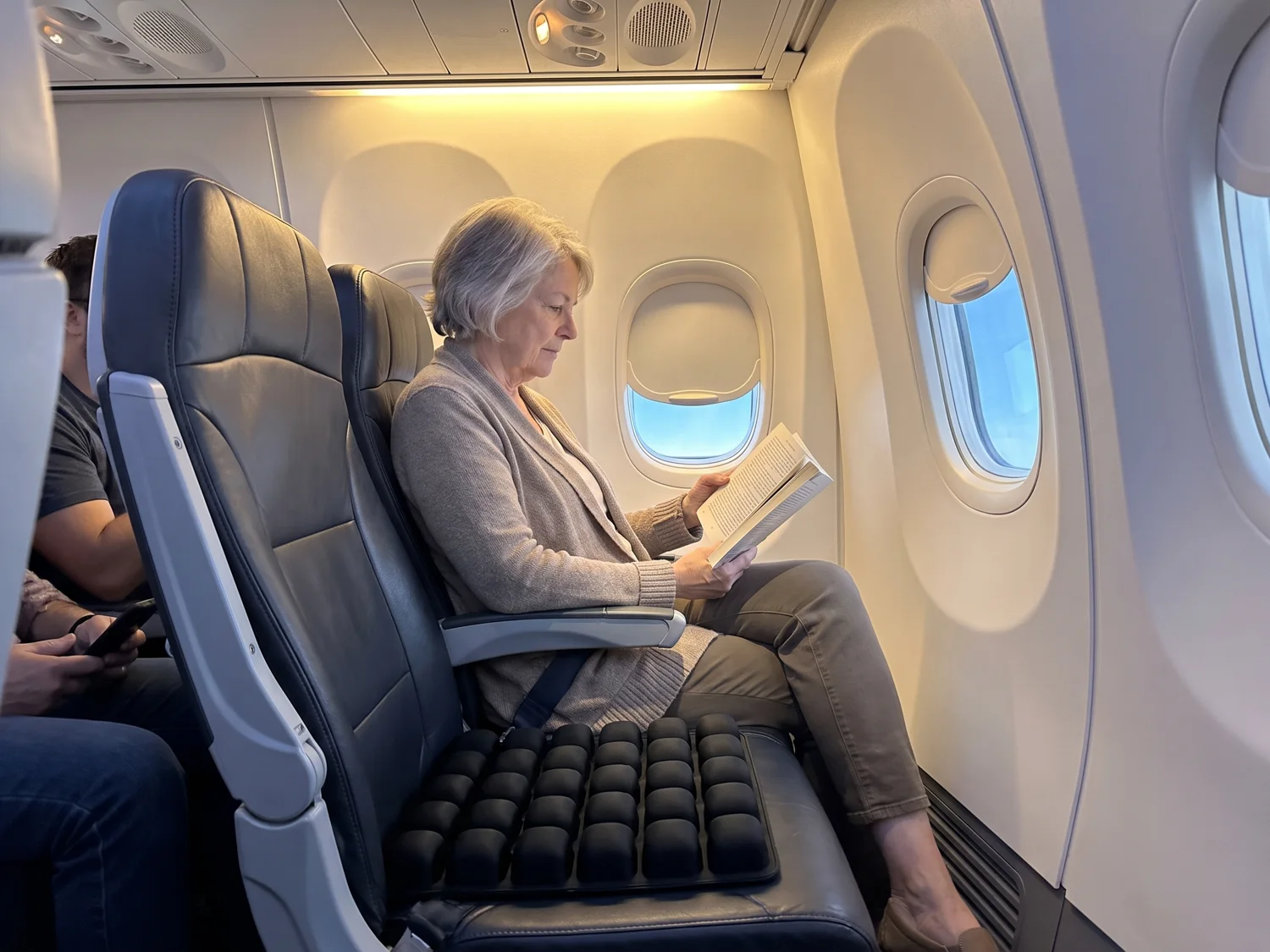
The cushion arrived in time for our flight home. Mom was skeptical when I showed it to her. "Mark, I've tried foam cushions. They don't work."
"Mom, this isn't foam. It's the same air cell technology Carol uses at the hospital for patients who can't move all day. Just try it."
We boarded our flight home together. She unfolded it onto her seat. Sat down.
"Oh. That's... different. I can feel it adjusting."
"That's the air redistributing. It'll keep doing that the whole flight."
Hour 2: she was reading, completely absorbed.
Hour 4: she'd fallen asleep. Deep sleep, not the restless half-sleep you get on planes.
Hour 6: we were talking about family memories. She shifted naturally, comfortably. She caught herself. "Mark, I haven't felt that pressure building up. Not once."
Hour 9: we landed in New York. She stood up normally. No stiffness. No hesitation. No grimace.
She looked at me with tears in her eyes. "I can't believe something this simple works this well."
The next day, she texted me: "I'm not dreading my next trip anymore. That's the first time I've said that in five years."
Three weeks later she flew to Chicago to see a friend and left the cushion in the car by mistake. Hour two, the old shifting was back. Hour four, the ache. She has not flown without it since.
Check AvailabilityThe 22 Trips She Had Already Given Up
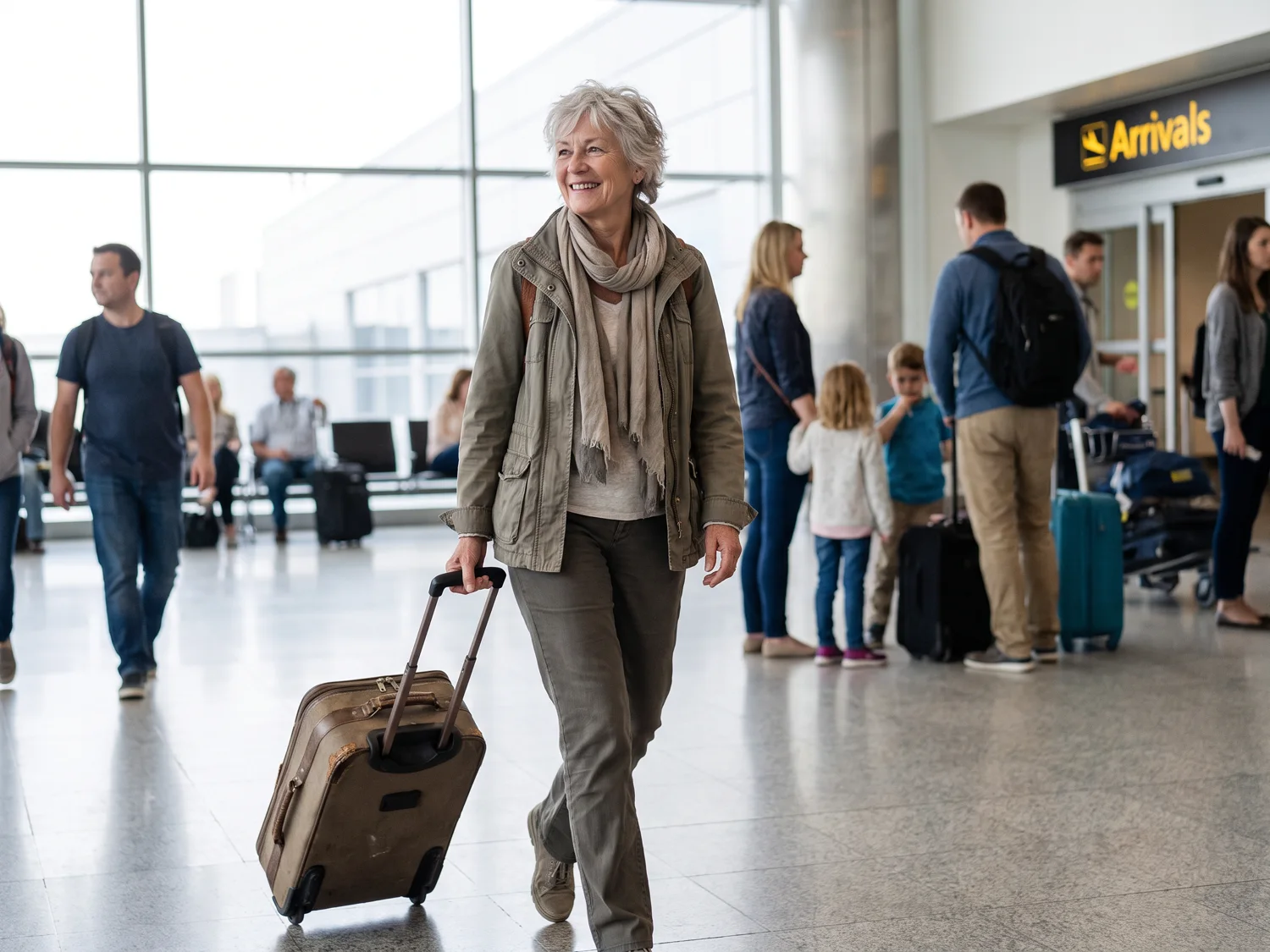
After seeing Mom's transformation, I started thinking about the real cost. Not just money. The trips you didn't take because you couldn't face another painful flight.
Travelers over 55 drop from 3.2 trips per year to 1.7 trips per year. Over 15 years, the period airlines reduced padding, that's 22 trips you didn't take.
22 times you said "maybe next year" instead of booking. How many were once-in-a-lifetime experiences? Visiting grandchildren, aging parents, old friends?
Mom told me two weeks later: "I realized I've been saying 'I'm too old for long flights' for five years. But I'm not too old. The seats just got worse."
"I gave up trips I could have taken because I thought it was my body failing. It wasn't. It was $3 of padding removed to save jet fuel."
That's what made me furious. Not that airlines optimized for profit. But that millions of people blamed themselves for pain that was engineered into them.
And then there's the business class trap. New York to Valencia, business class: $4,200 per person. That's $8,400 for a couple.
For 18 hours of flying to escape seats that used to be comfortable. $467 per hour to avoid pain they deliberately created.
Mom flies 3-4 times per year. If she'd paid for business class over 5 years? $63,000-$84,000 spent on "comfort" that used to be standard.
Mom texted me last week: "I'm booking Japan for next spring. I haven't been that excited about a trip in a decade. Knowing I can sit comfortably for 13 hours changed everything."
It's not a cushion. It's freedom.
Seventy-Nine Dollars for a Cushion
Mom said it out loud when I told her the price. It is the first thing most people say, and it is fair.
Set it against the receipts she already had: the foam wedge, the gel pad, the inflatable ring. Seventy-five dollars, spent in twenty- and thirty-dollar pieces over three years, none of it touching the surface she was sitting on.
Most people in this position have already spent this money. They just spent it in small pieces, which is easier to do and harder to notice.
Then set it against the escape the airlines sell: $4,200 for one business-class seat to Valencia. One flight.
The cushion has not stayed in her carry-on either. It lives on the driver's seat of her car between trips. Two hours to my sister's used to be her limit before she had to stop.
Right now it is $79.99 instead of $159, the half-price launch offer. Once, on proven medical-grade technology, instead of paying the airlines' ransom every time you fly.
Why I Wouldn't Wait Until the Week of Your Flight
Right now, we're in the busiest stretch of the travel year. It's September. All across the country, people your age are booking the flights they take every year.
Thanksgiving with the grandkids. The family gathering in December. The winter trip they have promised themselves.
This is the exact season this cushion was built for. Here's the honest part: most of Ralmutino's orders still come from word-of-mouth, pilots, flight attendants, travelers like Mom who tell everyone they know.
In the run-up to the holidays, that word travels fast. People realize their flight is two weeks out and they don't want to spend it the way they spent the last one.
So demand climbs every autumn, right before the most people are flying:
- Families flying home for Thanksgiving
- Grandparents booked for the holidays with the grandkids
- Retirees finally taking the bucket-list trip they've put off for years
- Flight attendants and travel groups passing it to anyone who'll listen
And here's the part that should matter most to you... The trip you take this holiday season, you only take once.
If your flight is weeks away and you wait, there's no second version of that trip, the comfortable one.
You fly the only one you get, the same way you flew the last: shifting, aching, counting down the hours. That's the real cost of waiting. Not the cushion. The trip.
So here's the simple, practical reason to handle this today instead of "soon". It has to ship out to you, and in the thick of travel season, deliveries only run slower.
Order now and it reaches you with time to spare. Wait until the week of your trip, and there's a real chance it's still in transit while you're sitting at the gate.
Check AvailabilitySixty Days, and the Risk Sits With Them
Sixty days is two round trips for most people, and long enough to include the one that always hurt.
Take it on a flight. If you land the way you always land, stiff and counting the minutes, you send it back.
The full amount is returned. Not store credit, no restocking fee, and you do not have to make a case for it.
Shipping is free inside the US, and it leaves the warehouse within one business day.
So the only thing you are actually risking is the next flight, and you were going to take that either way.
Mom's verdict, after nine hours, was not "it helped". It was "I forgot about my seat". That is the only test that means anything with a cushion.
The Questions Everyone Asks Before They Order
Will it fit a standard economy seat?
Yes. It is cut to the width of a current economy seat, which is narrower than it was fifteen years ago. It sits inside the seat pan rather than perching on the edges.
Do I have to inflate it?
No. The 36 cells arrive sealed and ready. You unfold it onto the seat and sit down. No valve, no pump, and no slow leak by hour four.
How is this different from a memory foam cushion?
Foam compresses under your weight and stays compressed, so by hour three you are sitting on the seat again. The air cells keep moving and sharing the load, which is why the difference shows late in a flight rather than at the start.
Does it take up much luggage space?
It folds in half and clips to a carry-on handle. It travels on the outside of your bag rather than inside it, so it takes no space from what you packed.
Can I use it in a car or at a desk?
Yes, and most buyers end up doing exactly that. Any hard seat has the same problem. The aircraft is just where you cannot get up.
Is the cover washable?
The cover unzips and machine washes cold. Air dry it rather than tumbling.
Will it help with an existing back problem?
It changes how your weight is spread on a hard seat, which many travelers find more comfortable. It is a cushion, not a medical device, so speak to your doctor about a diagnosed condition.
How fast does it ship?
Orders leave the US warehouse within one business day, tracked, with free standard shipping. Five to ten business days to your door.
Your Two Choices
Choice One: keep accepting what airlines engineered. You book your next trip. You're excited, until you remember the flight. That familiar dread sets in.
Flight day: you board. Sit. Within two hours, you're shifting.
Hour four: pain. Hour six: counting minutes. You walk off stiff, hobbling, exhausted.
Day one recovering instead of exploring. And you blame yourself. "I'm too old for this."
That's what airlines want you to think.
Choice Two: stop paying their ransom. You invest once in medical-grade technology. Same technology hospitals use for 12-hour sitting periods.
You fly economy without suffering. You board with confidence. Unfold it onto the seat.
The air cells adjust automatically. Hour six: you realize you haven't shifted position in 45 minutes. You land.
Walk off normally. Arrive ready, not recovering. And you keep your $8,400.
Check AvailabilityNotes From People Who Had Already Tried the Foam Ones
"I showed this to my father who's been avoiding flights to see his grandkids. He just booked his first trip in two years."
"My wife and I ordered two after reading your story. Just got back from Italy. First time in a decade we both walked off a long flight without pain."
"I read your story about your mom and it was like you were describing me. Ordered it for my flight to see my daughter in Portland. Walked off that plane pain-free for the first time in years."
"Nine hours to Lisbon and I got up at the end without that seized feeling I had accepted as part of flying. I have flown that route twice a year for a decade."
"I had been pricing up an upgrade, two thousand more for the leg to Auckland, purely so I could sit down comfortably. Bought this instead and flew economy without counting the hours."
Mom almost gave up travel because airlines removed $3 of padding to save fuel. She's planning her third trip this year. The airlines engineered a trap.
You don't have to stay in it.
P.S. Since Mom's transformation, I've made it my mission to tell every traveler I know about this. The responses have been overwhelming. People who'd given up on long flights are booking trips again.
P.P.S. Mom booked Japan the week the cushion arrived. If you have a flight this holiday season, the only version of it that is comfortable is the one you order for now, while it can still reach you in time.
Reclaim Your Travel Freedom With the Ralmutino Cushion
The first air-cell cushion adapted for traveling. 36 sealed cells, under a pound, folds flat and clips to your carry-on, 60-day return window.
Check Availability